Why the Free NaarNederland Kit Isn't Enough: The Case for Structured Exam Training
This is a question we encounter constantly. And it's a fair one. After all, the NaarNederland package contains official exam materials, practice questions, and study guides. If the government provides everything you need for free, spending money on additional preparation might seem unnecessary or even wasteful.
But here's what the statistics reveal: a significant percentage of candidates fail their civic integration exam on the first attempt. These aren't unprepared individuals who walked in without studying. Many of them diligently worked through the NaarNederland materials. They read every page, completed every exercise, and still walked out of the exam centre with disappointing results.
The gap between having access to information and being truly prepared for exam conditions is where structured training makes all the difference.
Understanding What the NaarNederland Kit Actually Provides
Before discussing supplementary training, let's give credit where it's due. The NaarNederland package is genuinely valuable. It includes:
Study materials covering Dutch society and culture (Kennis van de Nederlandse Samenleving - KNS)
Language learning resources for A1-level Dutch
Practice exercises for reading comprehension
Speaking exam preparation materials
Sample questions representative of actual exam content
For a free resource, this is remarkably comprehensive. The materials are created by the same organization that administers the exam, ensuring alignment with what candidates will face on test day.
However, having the right information and being able to perform under exam conditions are fundamentally different skills. This distinction is crucial to understanding why additional training delivers results that self-study alone cannot.
1. The Absence of Realistic Time Pressure
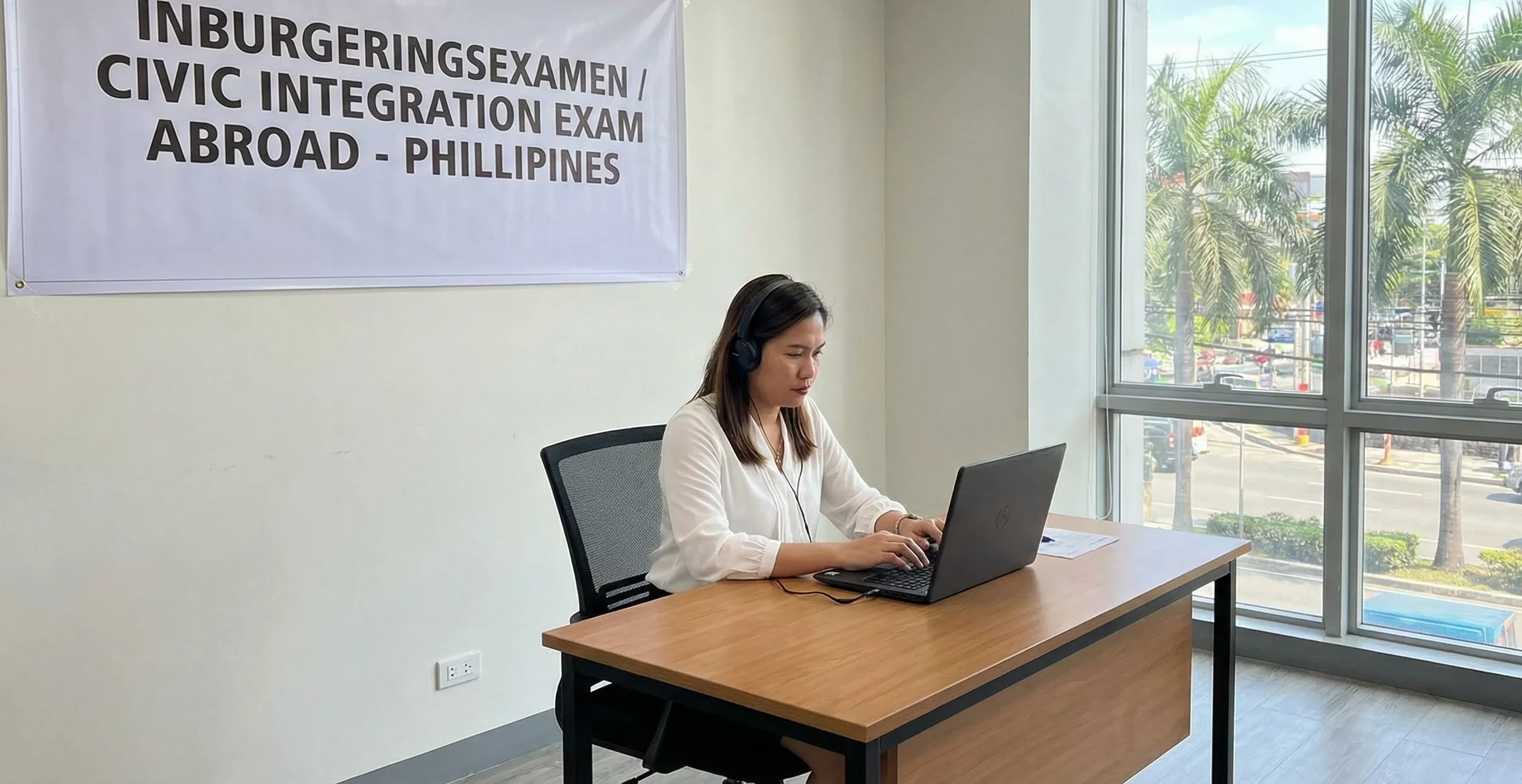
The NaarNederland package allows you to study at your own pace. This flexibility, while comfortable, creates a dangerous blind spot. The actual exam operates under strict time constraints. You don't have the luxury of re-reading a passage three times or pondering a question for five minutes.
During the reading exam, you'll face multiple texts with comprehension questions, all within a fixed timeframe. The speaking exam gives you mere seconds to process a prompt and formulate a response. Your brain needs to be trained for rapid processing and quick decision-making.
Self-study doesn't build this muscle. When you practice without time pressure, you're essentially training for a different test than the one you'll actually take. It's like preparing for a sprint by going on leisurely walks—related activities, but the performance demands are entirely different.
Structured exam training introduces authentic time pressure from the beginning. You practice under conditions that mirror the actual exam, building the cognitive speed and stress resilience that test day demands.
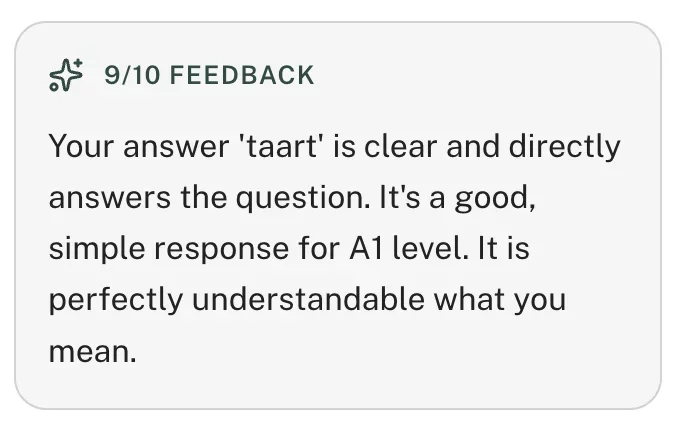
2. No Feedback Loop for Speaking Practice
The speaking portion of the civic integration exam is where many candidates stumble most severely. And it's precisely where the NaarNederland kit's limitations become most apparent.
You can read the speaking prompts. You can record yourself answering them. But who tells you if your pronunciation is comprehensible? Who identifies that you're consistently making the same grammatical error? Who notices that you speak too quickly when nervous, making your responses difficult to understand?
Speaking is a skill that requires external feedback to improve. When you practice in isolation, your mistakes become habits. You reinforce errors rather than correcting them. And by the time you're sitting in the exam booth, those habits are deeply ingrained.
Effective speaking preparation requires either human feedback or sophisticated AI-powered analysis that can identify specific pronunciation issues, flag grammar problems, and guide you toward more natural Dutch speech patterns. Self-study simply cannot provide this.
3. Knowledge Retention vs. Knowledge Acquisition
Reading through the KNS materials once or even several times creates an illusion of understanding. You recognize the information when you see it. The concepts feel familiar. This familiarity is deceptive.
The exam doesn't test recognition. It tests recall. You need to actively retrieve information from memory, often with tricky phrasing designed to test genuine understanding rather than superficial familiarity.
Research in cognitive science consistently demonstrates that passive reading is one of the least effective methods for building lasting knowledge. Active recall—being forced to retrieve information from memory through practice questions and exercises—produces dramatically better results.
The NaarNederland materials help you acquire knowledge. But they don't systematically build the recall pathways you need for exam success.
Structured training programs incorporate spaced repetition and active recall principles. They present questions in varying formats, at strategic intervals, forcing your brain to build robust retrieval pathways.
4. Identifying Personal Weak Points
When you study independently, everything receives equal attention. You spend as much time on topics you've already mastered as on areas where you're struggling. This inefficiency compounds over time.
Worse, humans are notoriously poor at accurately assessing their own competencies. You might feel confident about a topic where you actually have significant gaps, while spending excessive time on areas where you're already proficient.
Structured training programs track your performance systematically. They identify patterns in your mistakes. They recognize that you consistently confuse certain vocabulary pairs, or that you struggle with specific question types in the reading section. This data-driven approach ensures your study time is allocated where it will have the greatest impact.
5. Building Exam-Day Confidence
There's a psychological dimension to exam performance that pure content knowledge cannot address. Walking into the exam centre, many candidates experience anxiety that significantly impairs their performance. They might know the material, but stress disrupts their ability to access and apply that knowledge.
Confidence comes from experience. When you've completed hundreds of practice exercises under exam-like conditions, when you've heard the speaking prompts and formulated responses dozens of times, when you've encountered every type of tricky question the exam might throw at you—the actual test feels familiar rather than threatening.
Self-study cannot simulate this experience with sufficient intensity or frequency. You need structured practice that exposes you to comprehensive exam scenarios until the format becomes second nature.
The Mathematics of Preparation Investment
Let's consider the practical economics. A failed exam means:
Additional exam fees for retaking the test
Extended waiting periods before you can try again
Delayed visa processing, potentially by months
Emotional toll on you and your family
Continued separation from loved ones already in the Netherlands
For many candidates, each month of delay has concrete costs, like lost income opportunities, extended visa uncertainty, family separation, and ongoing stress. When you calculate the true cost of being insufficiently prepared, investment in proper training often is the most economically rational choice.
Beyond the purely financial calculation, there's the opportunity cost of your time. If you spend many hours with sub-optimal study methods that don't translate into exam success, you've invested significant effort with disappointing returns. Structured training makes your study time more effective, meaning better results with potentially less total time invested.
What Effective Exam Training Actually Looks Like
Not all supplementary preparation is created equal. The most effective training programs share certain characteristics:
Adaptive questioning: Rather than presenting the same questions in the same order every time, strong programs adjust to your performance. Struggle with healthcare-related KNS questions? You'll see more of those until the gap is addressed.
Realistic speaking practice: The speaking exam requires you to respond spontaneously to audio prompts. Effective training replicates this precisely—you hear questions just as you will on exam day, record your responses, and receive feedback on your performance.
Comprehensive content coverage: While focusing on weak areas matters, you also need assurance that you've encountered the full range of potential exam topics. Good programs ensure nothing important falls through the cracks.
Progress tracking: Seeing your improvement over time maintains motivation and helps you know when you're genuinely ready for the exam versus when additional practice is needed.
Mobile accessibility: Modern life is busy. The ability to practice during commutes, lunch breaks, or any spare moment dramatically increases the total practice time you can accumulate.
The PolderPass Approach
This is precisely why PolderPass exists. We built our platform specifically to address the gaps that inevitably remain after working through the NaarNederland materials.
Our speaking practice uses advanced speech recognition to evaluate your pronunciation and provide immediate feedback. You don't just record yourself and hope for the best—you receive specific guidance on where your spoken Dutch needs improvement.
Our reading exercises mirror actual exam conditions. You build the speed and efficiency that test day demands before you're in the high-stakes environment of the exam centre.
Our KNS module uses intelligent repetition to ensure information moves from short-term recognition to long-term recall. Questions adapt to your performance, ensuring you spend time where it matters most.
And everything works on your phone, tablet, or computer—fitting naturally into your daily routine rather than demanding large blocks of dedicated study time.
Who Benefits Most from Additional Training?
While supplementary preparation helps most candidates, certain profiles see particularly dramatic benefits:
Those learning Dutch as their first European language: If you speak Arabic, Turkish, or other non-European languages, Dutch presents additional challenges. The sounds are unfamiliar. The sentence structures are different. Extra speaking practice makes an enormous difference.
People who haven't been in formal education recently: If it's been years since you last took an exam of any kind, you may have forgotten what structured test-taking requires. Training rebuilds those skills.
Candidates with limited speaking opportunities: If you're preparing from a country with few Dutch speakers, you have minimal opportunity for natural conversation practice. Structured speaking exercises fill this gap.
Those with high stakes on the timeline: If visa deadlines create pressure for first-attempt success, the insurance of comprehensive preparation is particularly valuable.
Anyone who's already failed once: If your previous attempt didn't succeed, something in your preparation needs to change. Simply repeating the same approach is unlikely to produce different results.
A Complementary Relationship, Not a Replacement
We want to be absolutely clear: PolderPass is designed to complement the NaarNederland package, not replace it. The official materials provide essential content and legitimate exam examples. They should be your foundation.
What we provide is the structured, active, feedback-rich practice layer that transforms passive knowledge into exam-ready performance. Think of it like the difference between reading about swimming and actually practicing in a pool. Both have value. But only one prepares you to perform when it matters.
The Bottom Line
The NaarNederland kit is an excellent resource. It's free, official, and contains valuable content. You should absolutely use it.
But if passing on your first attempt matters to you—if you want to minimize uncertainty, reduce stress, and give yourself the strongest possible foundation for exam day—structured training makes a measurable difference.
The exam represents your gateway to a new life in the Netherlands. The question isn't whether additional preparation helps. The question is whether that enhanced probability of success is worth the investment.
For most candidates, when they honestly consider the costs of failure against the investment in proper preparation, the answer becomes clear.
Your future in the Netherlands is worth preparing for properly.
Your First Step to the Netherlands
The sooner you start, the more prepared you'll be. Sign up now and start preparing for your Inburgeringsexamen today
 The Ultimate Guide to the Dutch Civic A1 Integration Exam Abroad (Inburgeringsexamen buitenland) in 2026 This guide focuses on the A1 exam you take outside the Netherlands in 2026. It does not cover the in-Netherlands integration route (which can involve different levels and modules). Public sources report no rule changes that take effect in January 2026 for the A1 abroad exam, but requirements can depend on your permit route and personal situation. Always confirm what applies to you with IND and your Dutch embassy or consulate.
Why the Free NaarNederland Kit Isn't Enough: The Case for Structured Exam Training The Dutch civic integration exam (inburgeringsexamen buitenland) represents one of the most significant hurdles for anyone seeking to build a life in the Netherlands. Whether you're joining a partner, reuniting with family, or pursuing new opportunities, passing this exam is your gateway to obtaining an MVV visa. The Dutch government, recognizing the importance of proper preparation, offers the NaarNederland self-study package completely free of charge. It's comprehensive, official, and costs nothing. So why would anyone need anything more? Learn more in this guide.
The Ultimate Guide to the Dutch Civic A1 Integration Exam Abroad (Inburgeringsexamen buitenland) in 2026 This guide focuses on the A1 exam you take outside the Netherlands in 2026. It does not cover the in-Netherlands integration route (which can involve different levels and modules). Public sources report no rule changes that take effect in January 2026 for the A1 abroad exam, but requirements can depend on your permit route and personal situation. Always confirm what applies to you with IND and your Dutch embassy or consulate.
Why the Free NaarNederland Kit Isn't Enough: The Case for Structured Exam Training The Dutch civic integration exam (inburgeringsexamen buitenland) represents one of the most significant hurdles for anyone seeking to build a life in the Netherlands. Whether you're joining a partner, reuniting with family, or pursuing new opportunities, passing this exam is your gateway to obtaining an MVV visa. The Dutch government, recognizing the importance of proper preparation, offers the NaarNederland self-study package completely free of charge. It's comprehensive, official, and costs nothing. So why would anyone need anything more? Learn more in this guide.